

Powder Coating vs Anodising Aluminium: Which Should You Choose?
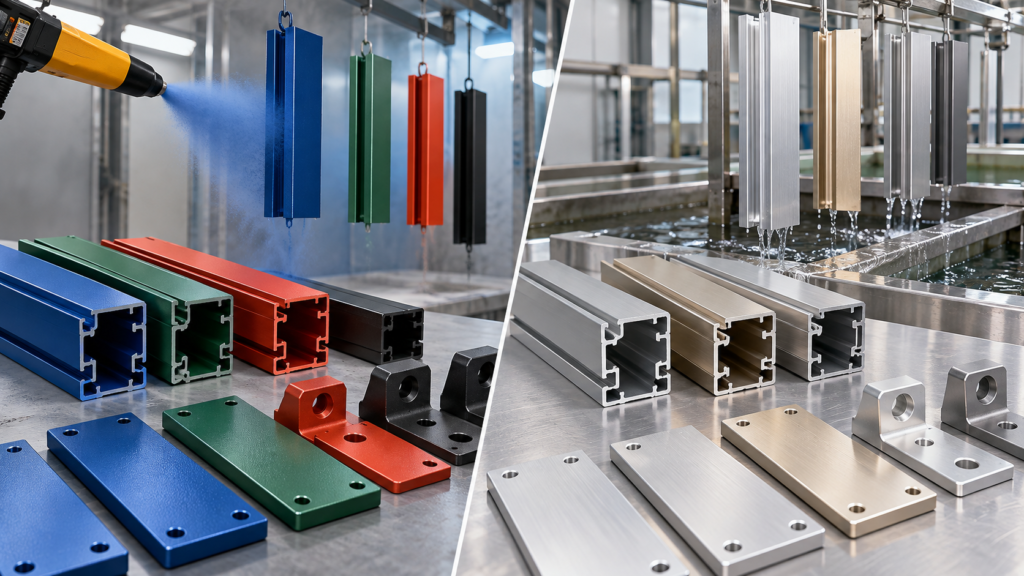
Powder coating and anodising are the two most common finishing methods for aluminium, but they protect the metal in completely different ways. Anodising is an electrochemical process that converts the aluminium surface into a hard oxide layer — it becomes part of the metal itself. Powder coating applies a separate polymer layer on top of the aluminium using electrostatic spray and oven curing.
Both produce durable, attractive finishes, but they differ significantly in colour range, scratch resistance, cost and repairability. This guide compares the two so you can choose the right finish for your project.
Key Takeaways
- Anodising creates a hard oxide layer that is part of the aluminium — it cannot peel or flake
- Powder coating applies a separate polymer layer on top — thicker, more colourful, but can chip
- Anodised aluminium is harder (up to 70 HRC) but limited to metallic/translucent colours
- Powder coating offers 200+ RAL colours in matt, satin, gloss and textured finishes
- Anodising is typically more expensive per square metre than powder coating
- For architectural aluminium where colour choice matters, powder coating is the standard specification
- Both meet the requirements of BS EN 12373 for aluminium surface treatment
What Is the Difference Between Powder Coating and Anodising?
The fundamental difference is that anodising changes the aluminium surface itself, while powder coating adds a layer on top of it. Anodising uses an electrolytic process to grow a thick, hard aluminium oxide layer from the metal surface outward. Powder coating applies a polyester or epoxy powder electrostatically and cures it in an oven at 180–200°C to form a separate film.
| Feature | Powder Coating | Anodising |
|---|---|---|
| How it works | Polymer layer applied on top of aluminium | Oxide layer grown from the aluminium surface |
| Part of the metal? | No — separate layer | Yes — integral to the surface |
| Coating thickness | 60–120 microns | 5–25 microns (standard), up to 50 microns (hard anodise) |
| Hardness | Moderate (2H–4H pencil hardness) | Very high (up to 70 HRC for hard anodise) |
| Scratch resistance | Good | Excellent |
| Colour range | 200+ RAL colours, any colour | Limited — metallic, bronze, black, clear, translucent dyes |
| Colour consistency | Excellent — powder batch controlled | Variable — depends on alloy composition and bath chemistry |
| Appearance | Opaque, smooth, consistent | Metallic/translucent, shows base metal grain |
| UV resistance | Excellent (polyester) | Good (natural), moderate (dyed colours fade over time) |
| Corrosion protection | Good (sealed barrier) | Excellent (integral oxide + sealed pores) |
| Can it peel or flake? | Yes — if preparation is poor | No — it is the metal surface |
| Repairability | Must strip and recoat | Cannot be locally repaired — must re-anodise entire piece |
| Environmental impact | Near-zero VOCs, recyclable overspray | Uses acids and chemicals, requires waste treatment |
| Cost (per m²) | £2–£8 (standard) | £5–£15 (standard), £15–£30 (hard anodise) |
| Best for | Colour, decorative, architectural | Hardness, natural metallic look, wear resistance |
How Does Anodising Work?
Anodising is an electrochemical process where the aluminium component is submerged in an acid electrolyte bath (typically sulphuric acid) and an electrical current is passed through it. The aluminium acts as the anode — hence “anodising” — and oxygen is released at the surface, combining with the aluminium to form a thick layer of aluminium oxide (Al₂O₃).
This oxide layer is extremely hard (harder than the aluminium itself), porous when freshly formed, and can be dyed before sealing. The pores are sealed in hot water or nickel acetate to lock in any dye colour and close the surface against moisture and contaminants.
There are three main types of anodising:
Standard anodising (Type II) — 5–25 microns thick, used for decorative and general architectural applications. Available in natural (silver), bronze, black and limited dyed colours.
Hard anodising (Type III) — 25–50+ microns thick, extremely hard (up to 70 HRC). Used for engineering applications where wear resistance is critical — hydraulic cylinders, pistons, sliding components. Typically dark grey or black only.
Architectural anodising — a higher-specification standard anodise (15–25 microns) with tighter colour tolerances and longer sealing, governed by Qualanod standards for building applications.
How Does Powder Coating Aluminium Work?
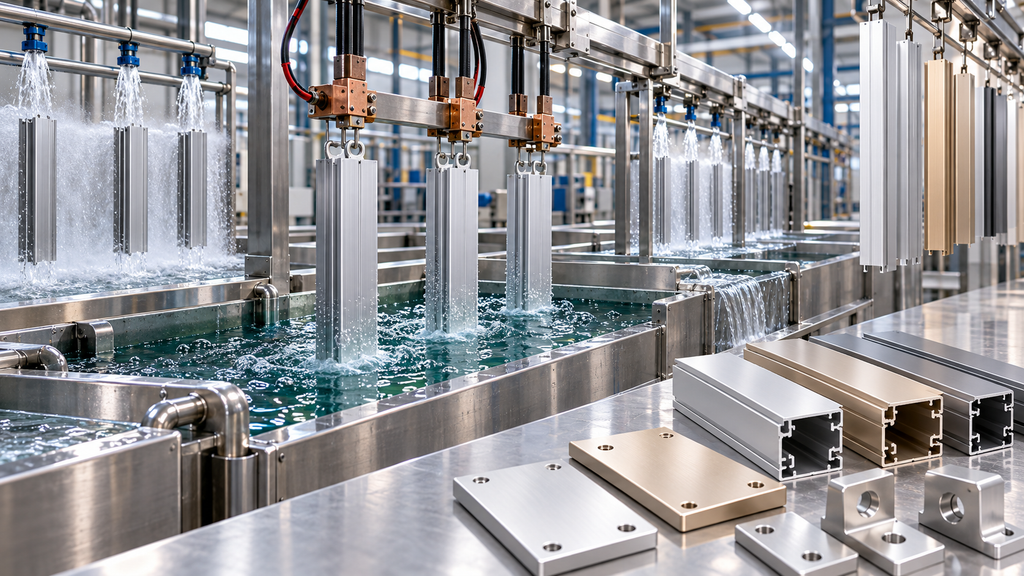
Powder coating aluminium follows the same basic process as coating steel, but with a critical difference in surface preparation. Aluminium naturally forms a thin oxide layer that prevents coatings from bonding properly. This oxide must be removed and replaced with a controlled conversion coating before the powder is applied.
At Spraytech, our aluminium powder coating process is:
1. Alkaline cleaning — removes grease, oil and handling marks from the aluminium surface.
2. Chromate-free conversion coating — removes the natural oxide and replaces it with a controlled conversion layer that promotes powder adhesion and prevents under-film corrosion. We use chromate-free chemistry, which is the current industry standard replacing older hexavalent chromate processes.
3. Powder application — polyester powder is applied electrostatically in our spray booths.
4. Oven curing — items are cured at 180–200°C for 10–20 minutes. The powder melts and cross-links into a hard, durable coating.
5. Inspection — film thickness, adhesion, colour accuracy and surface quality are checked before dispatch.
If shot blastin is required (for removing old coatings or heavy oxidation), we use aluminium oxide media — never steel grit, which would embed ferrous particles and cause corrosion beneath the coating.
When Should You Choose Powder Coating Over Anodising?
Powder coating is the better choice when:
Colour is important — Powder coating offers 200+ RAL colours in matt, satin, gloss, textured and metallic finishes. Anodising is limited to natural silver, bronze tones, black and a narrow range of translucent dyed colours. If the specification calls for a specific RAL reference — which most architectural projects do — powder coating is the only option.
Consistency across batches matters — Powder coating colour is controlled by the powder batch, not the aluminium alloy. Anodised colour varies depending on the alloy composition, casting method and anodising bath chemistry. Different aluminium alloys anodised in the same bath can produce visibly different colours — a common problem on architectural cladding projects where panels come from different extrusion runs.
Budget is a factor — Powder coating aluminium typically costs £2–£8 per square metre for standard work. Standard anodising costs £5–£15 per m², and hard anodising £15–£30+. For large-volume industrial and architectural work, the cost difference is significant.
The item will be repaired or recoated — A powder coated item can be stripped and recoated relatively easily. Anodised items cannot be locally repaired — the entire piece must be chemically stripped and re-anodised, which is more expensive and not always practical on installed components.
When Should You Choose Anodising Over Powder Coating?
Anodising is the better choice when:
Maximum scratch and wear resistance is needed — Anodised aluminium is significantly harder than powder coated aluminium. Hard anodise (Type III) reaches up to 70 HRC — harder than most steels. For components subject to abrasion, sliding contact or repeated handling (door hardware, handrails in high-traffic buildings, machine parts), anodising outperforms powder coating.
A natural metallic appearance is desired — Anodising preserves and enhances the natural look of aluminium. The brushed, satin or polished metal grain shows through the clear or tinted oxide layer. Powder coating is opaque — it covers the metal completely.
The coating must not peel or flake — Because the anodised layer is part of the metal surface, it cannot delaminate. Powder coating can chip or peel if the surface preparation was inadequate or the coating is damaged by heavy impact.
Chemical resistance is critical — Hard anodised surfaces provide excellent resistance to acids, alkalis and industrial chemicals. Powder coating provides good chemical resistance but is more susceptible to concentrated chemical attack.
Can You Powder Coat Anodised Aluminium?
It is not recommended. Powder coating should not be applied directly over an anodised surface because the anodic oxide layer acts as an electrical insulator — it prevents the electrostatically charged powder from adhering properly. The result is poor coverage, adhesion failure and a patchy, defective finish.
If an anodised component needs to be powder coated (for example, a colour change or a repair), the anodised layer must be chemically stripped first, then the aluminium is pre-treated with a standard conversion coating before powder application.
How Do Costs Compare?
| Finish | Cost Per m² | Best For |
|---|---|---|
| Standard powder coating | £2–£8 | Colour, decorative, high volume |
| Super durable powder coating | £4–£12 | Premium architectural, coastal |
| Standard anodising (Type II) | £5–£15 | Natural metallic, moderate wear |
| Hard anodising (Type III) | £15–£30+ | Maximum hardness, engineering wear |
For domestic items such as gates, railings and furniture, powder coating is almost always chosen because colour matters and cost is lower. For architectural aluminium where colour matching to a RAL reference is specified, powder coating is the industry standard. Anodising is reserved for applications where hardness, natural metallic appearance or chemical resistance is the priority.
For a quote on aluminium powder coating, contact Spraytech.
Frequently Asked Questions
Is powder coating better than anodising for aluminium?
It depends on the application. Powder coating is better for colour choice (200+ RAL colours vs limited metallic tones), colour consistency across batches, cost and repairability. Anodising is better for scratch resistance, hardness, natural metallic appearance and chemical resistance. For most architectural and decorative aluminium applications, powder coating is the standard choice.
Does anodised aluminium scratch easier than powder coated?
A: No — anodised aluminium is significantly harder and more scratch-resistant than powder coated aluminium. Standard anodise is harder than the base aluminium, and hard anodise (Type III) reaches up to 70 HRC. Powder coating is softer but thicker, providing good impact resistance rather than surface hardness.
Can you colour anodised aluminium?
Anodised aluminium can be dyed during the anodising process, but the colour range is limited to natural silver, bronze tones, black and a narrow range of translucent colours. The colours are also affected by the aluminium alloy composition, so colour consistency between different alloy batches is difficult. Powder coating offers unlimited colour choice with consistent results.
How long does anodising last compared to powder coating?
Both are long-lasting. Anodised aluminium in an architectural application typically lasts 20–30+ years. Powder coated aluminium lasts 15–25 years outdoors with polyester powder, or longer with super durable formulations. Anodised finishes do not peel but dyed colours can fade over time; powder coated finishes maintain colour well but can chip under heavy impact.
Which is cheaper — powder coating or anodising aluminium?
Powder coating is cheaper. Standard aluminium powder coating costs £2–£8 per m², while standard anodising costs £5–£15 per m² and hard anodising £15–£30+. For high-volume architectural or industrial work, the cost difference per component is significant.
An anodised aluminium be powder coated later?
Not directly. The anodised oxide layer must be chemically stripped first because it acts as an insulator that prevents electrostatic powder adhesion. After stripping, the aluminium is pre-treated with a standard conversion coating and then powder coated normally.
Conclusion
Powder coating and anodising both produce excellent finishes on aluminium, but they serve different purposes. Powder coating is the right choice for colour, decorative appearance, architectural specifications, cost-effectiveness and environmental performance. Anodising is the right choice for maximum hardness, natural metallic looks and engineering wear applications.
At Spraytech, we provide aluminium powder coating with chromate-free pre-treatment from two facilities in Bishop’s Stortford, serving London, Hertfordshire, Essex and the South East.