

Shot Blasting vs Grit Blasting: What Is the Difference?
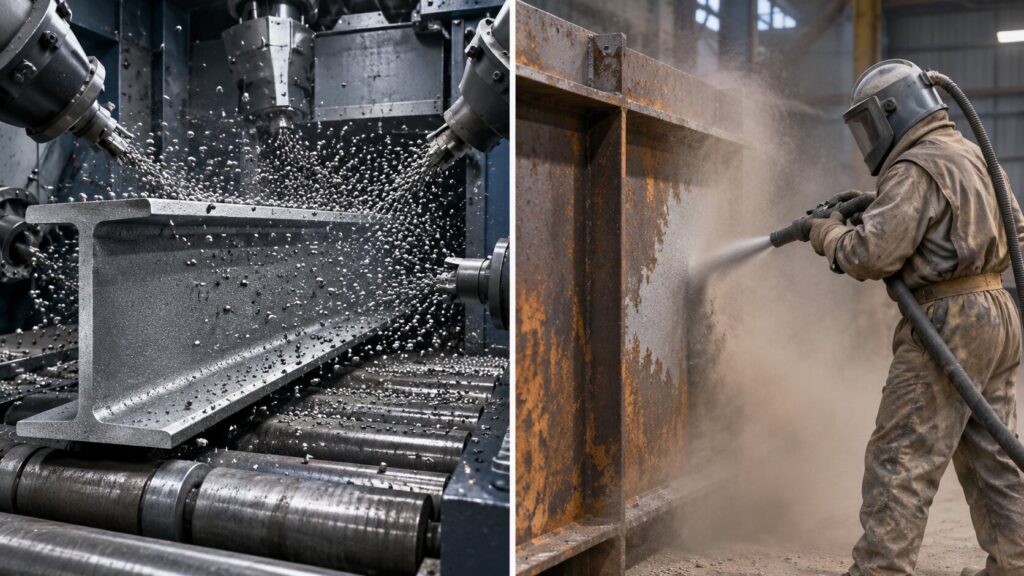
Shot blasting and grit blasting are both abrasive blasting processes used to clean and prepare metal surfaces before coating, but they use different media and produce different results. Shot blasting uses round, spherical particles (steel shot, glass bead) that peen the surface, while grit blasting uses angular, sharp-edged particles (steel grit, aluminium oxide, garnet) that cut into it.
The choice between them affects surface profile, cleaning speed, coating adhesion and finish quality — so understanding the difference matters before you specify or order either one.
Key Takeaways
- Shot blasting uses spherical media; grit blasting uses angular media — this is the core difference
- Grit blasting creates a sharper, deeper surface profile (50–100 microns) than shot blasting (25–50 microns)
- A deeper profile means stronger coating adhesion, which is why grit blasting is preferred before powder coating
- Shot blasting is gentler and better suited to cleaning without aggressive material removal
- According to AMPP (formerly NACE International), surface preparation accounts for over 80% of coating performance — choosing the right blasting method is critical
- Spraytech uses a controlled blend of shot and grit tailored to each job from our two Bishop’s Stortford facilities
What Is Grit Blasting?
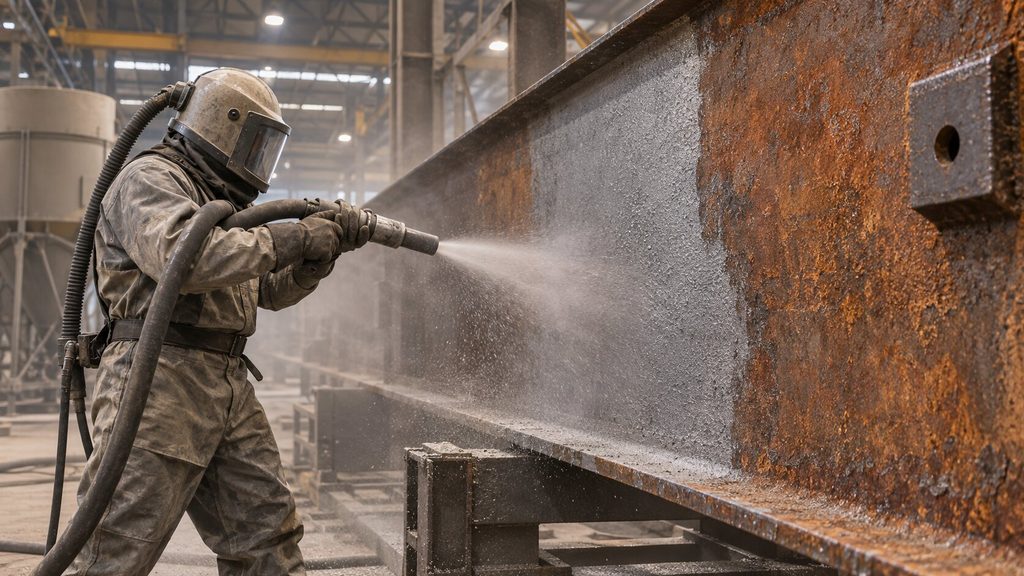
Grit blasting is an abrasive surface preparation process where angular, sharp-edged particles are propelled at high speed against a metal surface to remove rust, mill scale, old coatings and contaminants. The angular shape of the media cuts into the metal, removing material faster than round media and creating a rough, jagged surface profile that provides an excellent mechanical key for coatings to bond to.
Common grit blasting media include steel grit, aluminium oxide, garnet and crushed glass. Grit blasting is the preferred preparation method for heavy-duty industrial work, structural steelwork, and any application where maximum coating adhesion is required — including architectural and industrial powder coating.
The term “grit blasting” is sometimes used interchangeably with “sandblasting,” but traditional silica sand is now largely banned as a blasting medium in the UK and EU under COSHH regulations due to the risk of silicosis — a serious, irreversible lung disease caused by inhaling crystalline silica dust.
What Is Shot Blasting?
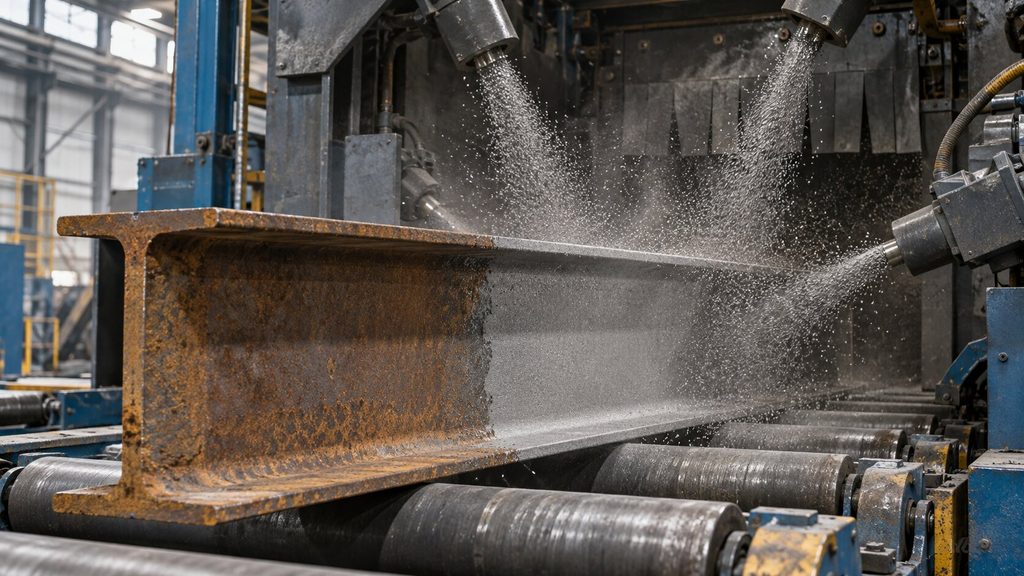
Shot blasting is an abrasive blasting process that uses spherical, round particles — typically steel shot or glass bead — to clean and prepare metal surfaces. Unlike the cutting action of grit blasting, shot blasting works by peening: the round particles strike the surface and compress it rather than cutting into it. This produces a smoother, more uniform surface profile with a dimpled texture.
Shot blasting is widely used in foundries for cleaning castings, in manufacturing for deburring components, and as a surface preparation step where a moderate profile is acceptable. It is also used for shot peening — a process that deliberately compresses the metal surface to improve fatigue resistance in aerospace, automotive and engineering components.
What Is the Difference Between Shot Blasting and Grit Blasting?
The core difference is the shape of the abrasive media and the surface finish it produces. Shot blasting uses round particles that peen and clean; grit blasting uses angular particles that cut and profile. Everything else — cleaning speed, profile depth, material removal rate and coating adhesion — follows from this one difference.
| Feature | Shot Blasting | Grit Blasting |
|---|---|---|
| Media shape | Spherical (round) | Angular (sharp-edged) |
| Common media | Steel shot, glass bead | Steel grit, aluminium oxide, garnet |
| Cleaning action | Peening (compresses surface) | Cutting (removes material) |
| Surface profile | 25–50 microns | 50–100 microns |
| Profile shape | Smooth, dimpled | Sharp, jagged |
| Cleaning speed | Moderate | Fast |
| Material removal | Low | High |
| Coating adhesion | Good | Excellent |
| Best for | Light cleaning, castings, peening | Heavy rust, mill scale, pre-coating prep |
| Surface finish | Smoother | Rougher |
| Risk of warping | Lower | Higher (on thin metals) |
| Media cost | Lower per kg | Higher per kg |
| Reusability | High (steel shot lasts longer) | Moderate (angular media breaks down faster) |
For powder coating applications, grit blasting is generally the better choice because the deeper, sharper surface profile provides a stronger mechanical bond between the metal and the coating. This is why the shot blasting and surface preparation process at Spraytech typically uses steel grit or a shot-grit blend rather than shot alone.
When Should You Use Grit Blasting?
Grit blasting is the right choice when:
The surface is heavily contaminated — thick rust, multiple layers of old paint, heavy mill scale or weld spatter. The angular cutting action of grit removes these faster and more completely than shot.
Maximum coating adhesion is required — for external architectural metalwork, structural steelwork, gates and railings and any item that will be exposed to weather, impact or wear. The deeper profile gives the coating more surface area to grip.
The specification calls for it — many industrial and architectural coating specifications require a surface profile of 50 microns or above, which can only be achieved reliably with angular media. ISO 8501-1 Sa 2½ (near-white metal) is the standard for most industrial powder coating work.
The item is mild steel — steel is robust enough to withstand aggressive grit blasting without damage. The sharp profile also helps the iron phosphate pre-treatment react more effectively with the exposed metal.
When Should You Use Shot Blasting?
Shot blasting is the better choice when:
The surface needs cleaning, not profiling — removing light surface rust, dirt or foundry sand from castings without significantly altering the surface texture.
The item is delicate or thin — sheet metal below 2mm, aluminium panels, stainless steel or items with fine detail. The peening action of round media is less likely to warp thin sections or damage edges.
A smooth finish is required — some decorative or precision components need a clean surface without the aggressive texture that grit blasting leaves.
Shot peening is the goal — improving fatigue strength on engineering components by compressing the surface layer rather than removing material.
What About Blasting Aluminium?
Aluminium requires special attention regardless of whether shot or grit blasting is used. The key rule is: never use ferrous (steel) media on aluminium. Steel shot or steel grit will embed iron particles in the soft aluminium surface, and these particles will corrode beneath the coating, causing blistering and adhesion failure.
For aluminium components, Spraytech uses aluminium oxide or glass bead media — both non-ferrous. Aluminium oxide provides an angular profile similar to steel grit but without the contamination risk. Glass bead provides a gentler, smoother profile for thinner or more delicate aluminium items.
After blasting, aluminium is treated with a chromate-free conversion coating before powder coating to ensure adhesion and corrosion resistance beneath the finish.
How Much Does Grit Blasting Cost in the UK?
Grit blasting costs depend on the size of the item, the level of contamination and whether blasting is a standalone service or part of a powder coating job. Typical UK prices for domestic items:
- Pair of garden gates: £30–£60 (blast only)
- Set of 4 garden chairs: £25–£50
- Single alloy wheel: £15–£30
- Railing section (per metre): £8–£15
- Bike frame: £20–£40
When combined with powder coating, blasting is usually included in the overall price. Contact us with photos and dimensions for an accurate quote.
Frequently Asked Questions
Is grit blasting the same as sandblasting?
Grit blasting and sandblasting are similar processes — both fire abrasive particles at a surface to clean it — but they use different media. Traditional sandblasting used silica sand, which is now largely banned in the UK under COSHH regulations because inhaling silica dust causes silicosis. Modern grit blasting uses safer alternatives: steel grit, aluminium oxide, garnet or crushed glass.
Which gives better results before powder coating — shot blasting or grit blasting?
Grit blasting generally gives better results before powder coating because the angular media creates a deeper, sharper surface profile (50–100 microns vs 25–50 microns for shot). This gives the powder coating a stronger mechanical key to bond to. Most powder coating specifications call for a grit-blasted or blended profile.
Can you grit blast aluminium?
Yes, but only with non-ferrous media such as aluminium oxide or glass bead. Using steel grit on aluminium would embed iron particles in the surface, causing corrosion beneath the coating. At Spraytech, we use dedicated non-ferrous media when blasting aluminium components.
Is grit blasting safe?
Modern grit blasting using steel grit, aluminium oxide or garnet is safe when performed with proper extraction, PPE and dust control. The health risk associated with blasting came from silica sand, which is why it was banned. Professional blasting facilities like Spraytech operate enclosed blast rooms with dust extraction systems and filtered air supply.
How long does grit blasting take?
Most domestic items can be grit blasted in 15–45 minutes. Larger structural items or heavily rusted components may take longer. The speed depends on the abrasive type, blast pressure and level of contamination.
What surface profile do I need before powder coating?
For standard polyester powder coating, a surface profile of 25–75 microns is recommended. For heavy-duty industrial or marine coatings, 50–100 microns may be specified. The correct profile depends on the coating system and the specification. Spraytech adjusts the blasting process to achieve the profile required for each job.
Do you offer grit blasting as a standalone service?
Yes. We provide grit blasting as both a standalone service and as part of our powder coating process. If you need items blasted for someone else to coat, or for a non-coating purpose such as cleaning or restoration, we can do that. Get in touch for a quote.
Conclusion
Shot blasting and grit blasting are both effective surface preparation methods, but they are not interchangeable. Grit blasting is the stronger choice before powder coating — it removes contamination faster and creates the deeper surface profile needed for long-term coating adhesion. Shot blasting is better suited to lighter cleaning, delicate items and applications where a smoother finish is required.
At Spraytech, we use a controlled blend of media tailored to each job — the material type, the condition of the surface and the coating specification all determine which approach we use. We provide shot blasting and grit blasting from both our Bishop’s Stortford facilities, for items up to 10 metres in length.