

How Is Powder Coating Applied? The 5-Step Process Explained
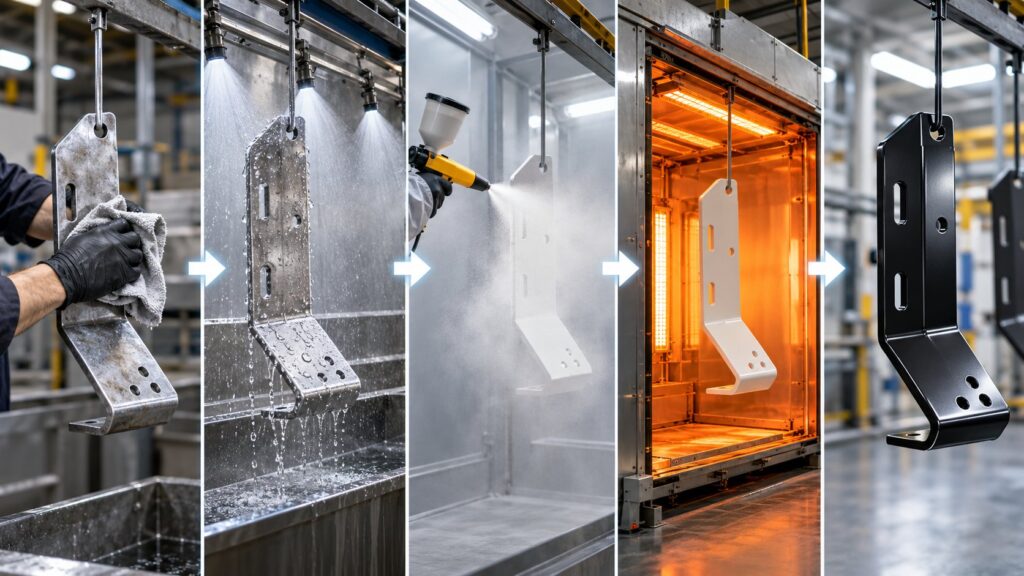
Powder coating is applied in five main steps: the metal is cleaned, shot blasted and pre-treated, then dry powder is sprayed on electrostatically, cured in an oven, and finally cooled and inspected. The powder coating process turns loose, dry powder into a tough, even, factory-quality finish — and each step matters, because the quality of the preparation and curing decides how long the finish lasts. Powder coating is an electrostatic spray process — charged powder is applied to an earthed metal part and then baked, as outlined by the UK Health and Safety Executive (HSE).
This guide explains how powder coating is applied, step by step, and why each stage is important.
Key Takeaways
- Powder coating is applied in five steps: clean → blast & pre-treat → apply powder → cure → cool & inspect
- The powder is applied dry and electrostatically charged so it clings evenly to the earthed metal
- It only becomes a hard finish once cured in an oven at around 180–200°C
- Preparation (cleaning, blasting, pre-treatment) is what determines how long the finish lasts
- The whole process is solvent-free, producing almost no VOCs and very little waste
How Is Powder Coating Applied? The 5-Step Process
Here is the powder coating process from start to finish:
Step 1 — Cleaning and Degreasing
The metal is first thoroughly cleaned to remove oil, grease, dirt and any loose material. Any contamination left on the surface stops the coating bonding properly, so this step is essential for a lasting finish.
Step 2 — Shot Blasting and Pre-Treatment
The part is shot blasted back to clean bare metal, creating a keyed profile for the powder to grip. A conversion coating is then applied — iron phosphate for steel, or a chromate-free coating for aluminium — to improve adhesion and add corrosion resistance.
Step 3 — Applying the Powder
Dry powder is sprayed onto the part through an electrostatic spray gun. The gun gives the powder particles an electrical charge, and because the part is earthed, the charged powder is attracted to it and clings evenly to every surface, edge and corner — even wrapping around to areas the gun is not pointing directly at.
Step 4 — Curing in the Oven
The coated part is moved into a curing oven at around 180–200°C. The heat melts the powder, which flows out into a smooth layer and then chemically cross-links into a hard, continuous film. This curing step is what turns loose powder into a durable finish — we explain it in detail in why powder coating needs an oven.
Step 5 — Cooling and Inspection
Once cured, the part is cooled and inspected for coverage, colour and finish quality before being dispatched. On heavy structural sections, metal temperature is monitored during curing to make sure the coating has fully cured throughout.
Why Each Step Matters
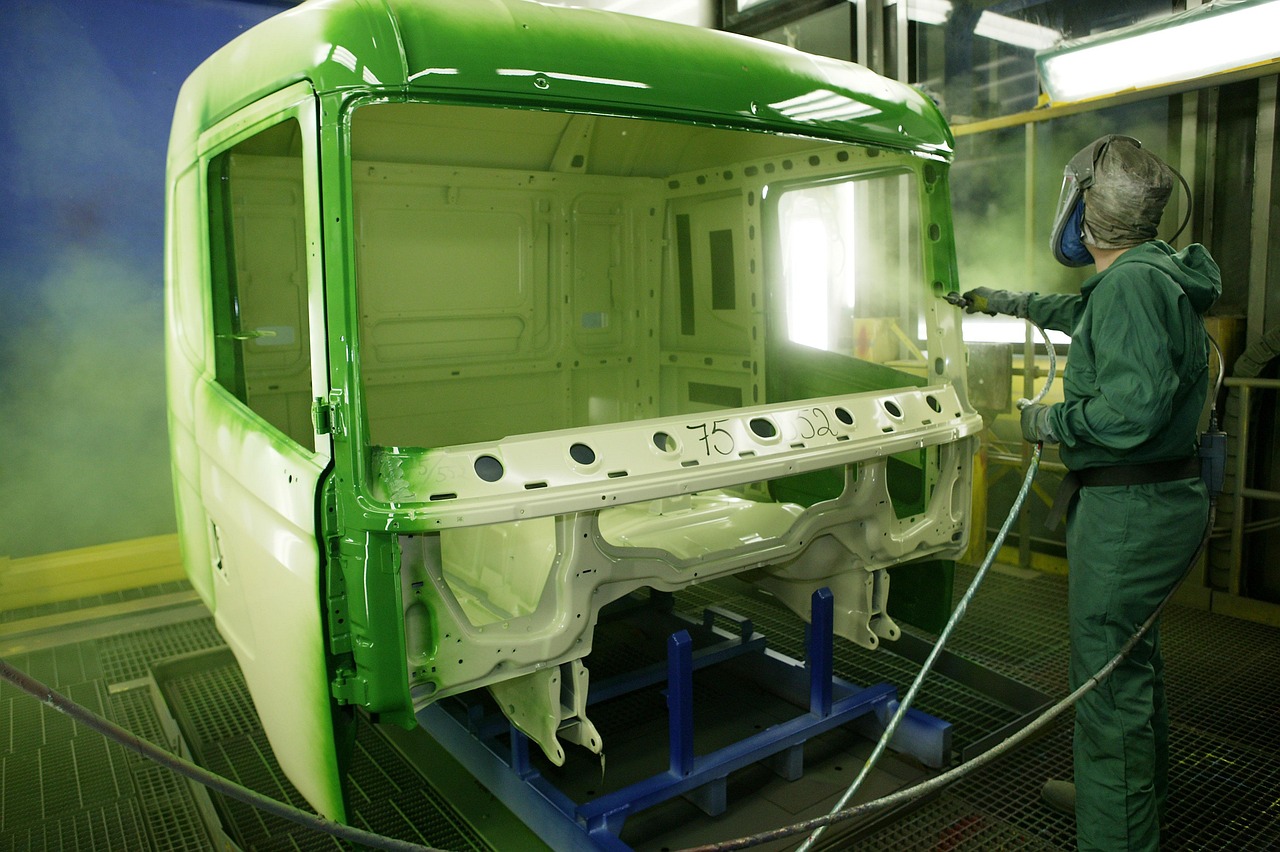
It is tempting to think the powder itself does all the work, but the preparation and curing are just as important. A coating applied over poor cleaning or inadequate blasting will fail early no matter how good the powder is, and powder that is not fully cured never reaches its full hardness and durability. Get every step right and the finish lasts for years — see our guide on how long powder coating lasts.
How Long Does the Powder Coating Process Take?
For most items the powder coating process takes a few hours from preparation to a cured, cooled finish, though the exact time depends on the size and complexity of the part and any preparation needed. Larger or multi-stage jobs take longer, and ongoing contract work is scheduled to fit production timelines.
Frequently Asked Questions
How is powder coating applied?
Powder coating is applied in five steps: the metal is cleaned, shot blasted and pre-treated, then dry powder is sprayed on through an electrostatic gun, cured in an oven at around 180–200°C, and finally cooled and inspected. The charged powder clings evenly to the earthed metal before curing.
What are the steps in the powder coating process?
The five steps are: (1) cleaning and degreasing, (2) shot blasting and pre-treatment, (3) electrostatic powder application, (4) curing in an oven, and (5) cooling and inspection. Preparation and curing are what make the finish durable.
Why is powder applied electrostatically?
The spray gun gives the powder an electrical charge, and because the part is earthed, the powder is attracted to it and clings evenly to all surfaces — including edges and recesses. This gives even coverage and very little waste, as overspray can be recovered.
Does powder coating need an oven?
Yes. Powder is applied dry and only becomes a hard, durable finish once it is cured in an oven at around 180–200°C. The heat melts the powder and cross-links it into a continuous film; without curing, it would stay as loose powder.
Is the powder coating process environmentally friendly?
Yes. Powder coating is solvent-free, so it releases almost no VOCs, and overspray powder can be collected and reused, producing very little waste. This makes it one of the cleaner metal finishing processes available.
Conclusion
The powder coating process — clean, blast and pre-treat, apply, cure and inspect — turns dry powder into a tough, even, long-lasting finish. Each step plays its part, and skipping or rushing any of them shows up later as a coating that fails early.
At Spraytech, we carry out every step in-house, from blasting and pre-treatment to controlled oven curing, at our facilities in Bishop’s Stortford, serving customers across London, Hertfordshire and Essex. Learn more about what powder coating is or get an idea of powder coating costs.