

What Is Powder Coated Aluminium Cladding and Where Is It Used?
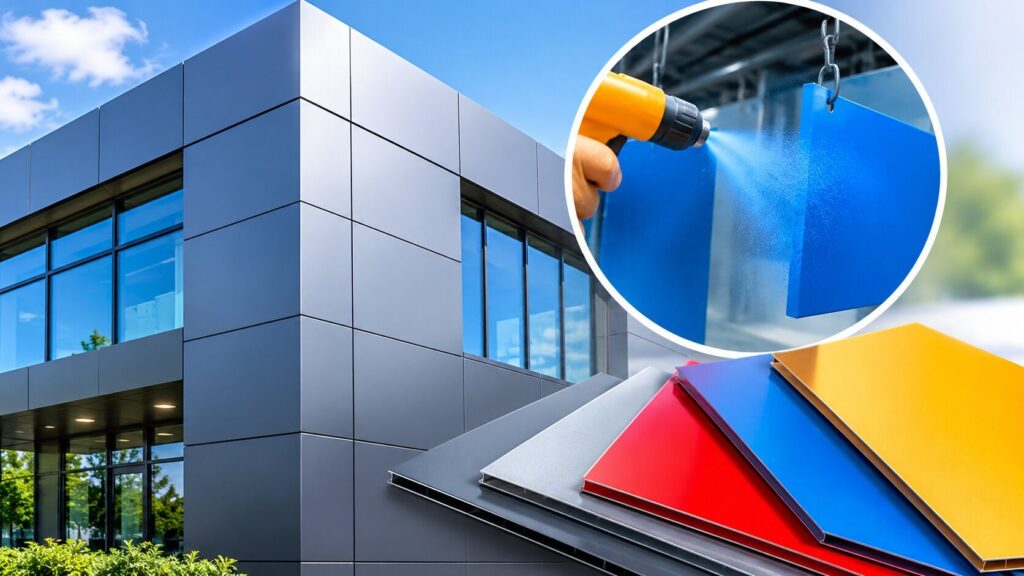
Powder coated aluminium cladding is aluminium sheet or panelling fixed to the outside of a building and finished with a tough, oven-cured powder coating. It is one of the most popular facade materials in the UK because it is lightweight, does not rust, can be made in almost any colour, and keeps its appearance for decades with very little maintenance. You will see it on offices, schools, hospitals, shops, warehouses and modern homes.
This guide explains what powder coated aluminium cladding is, how it is made, where it is used, and what to look for when specifying it for a project.
Key Takeaways
- Powder coated aluminium cladding is aluminium facade panelling with an oven-cured powder finish
- It is lightweight, corrosion-resistant and available in almost any RAL colour, texture or metallic effect
- It is used for rainscreen panels, fascias, soffits, column covers, louvres and window surrounds
- Correct pre-treatment and architectural-grade powder are essential for a long outdoor life
- A well-applied finish typically lasts 20–30+ years with only occasional cleaning
- Old or faded aluminium cladding can often be stripped and re-powder coated instead of replaced
What Is Powder Coated Aluminium Cladding?
Aluminium cladding is a layer of aluminium sheet, panels or profiles that forms the outer skin of a building. On its own, aluminium resists rust, but bare metal can dull, oxidise and look uneven over time. Powder coating adds a durable, decorative finish that protects the aluminium and gives the building its colour and character.
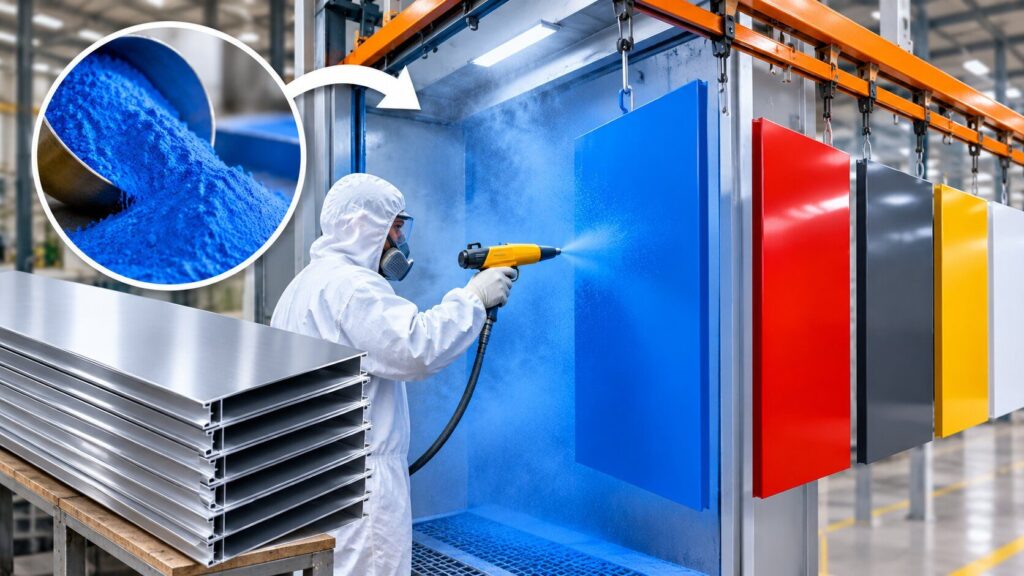
Unlike wet paint, powder coating is applied as a dry powder that is electrostatically charged so it clings evenly to the metal. The panels are then baked in an oven, where the powder melts, flows and cures into a hard, continuous film. This makes powder coated aluminium cladding tougher and more consistent than most painted finishes.
How Is Aluminium Cladding Powder Coated?
Getting a long-lasting finish on aluminium is all about preparation. A typical process looks like this:
- Cleaning and degreasing — removing oils, dirt and contaminants from the panels
- Pre-treatment — a chemical conversion coating (usually chrome-free) that helps the powder bond to the aluminium and resist corrosion creeping under the finish
- Drying — the panels are fully dried before coating
- Powder application — architectural-grade powder is sprayed electrostatically for an even film
- Curing — panels are cured in an oven at around 180–200°C (see why powder coating needs an oven)
- Quality checks — film thickness, adhesion, gloss and colour are checked before the panels leave the facility
Pre-treatment is the step that separates a 30-year facade from one that starts peeling after a few winters. For more detail, read our aluminium powder coating guide or the full powder coating process.
Where Is Powder Coated Aluminium Cladding Used?
Because it is light, strong and endlessly customisable, powder coated aluminium cladding is used across almost every building sector:
| Sector | Typical cladding uses |
|---|---|
| Commercial offices | Rainscreen facade panels, feature fins, entrance canopies |
| Education & healthcare | Coloured facade panels, fascias, soffits, window surrounds |
| Retail & leisure | Shopfronts, signage bands, column covers, canopies |
| Industrial & warehousing | Fascias, louvres, flashings, trims and capping |
| Residential | Apartment facades, balcony panels, extensions, garden rooms |
It is a favourite with architects and designers because it allows bold colours, metallic and textured finishes, and precise colour matching across a whole scheme. Construction contractors value it because panels arrive on site pre-finished and ready to fix.
What Are the Benefits of Powder Coated Aluminium Cladding?
- Long life — architectural-grade powders resist UV fading, chalking and weathering for decades
- Corrosion resistance — aluminium does not rust, and the coating adds an extra protective barrier
- Unlimited colour choice — almost any RAL or BS colour, in matt, satin, gloss, textured or metallic finishes
- Low maintenance — usually just an occasional wash with water and a mild detergent
- Lightweight — easier to handle and fix, and puts less load on the building structure
- More sustainable — powder coatings contain virtually no solvents (VOCs), overspray can be reclaimed, and aluminium is highly recyclable
Powder Coating vs Other Finishes for Aluminium Cladding
Powder coating is not the only way to finish aluminium cladding. Here is how it compares with the main alternatives (see also powder coating vs anodising):
| Finish | Colour choice | Durability outdoors | Best for |
|---|---|---|---|
| Powder coating | Almost unlimited | Excellent with architectural-grade powder | Most facades, colour-matched schemes |
| Anodising | Limited (metallic tones) | Excellent, but scratches show | Natural metallic look |
| Wet paint (liquid) | Wide | Good, but thinner film and higher VOCs | Small repairs and touch-ups |
| PVDF coil coating | Wide | Excellent | Large flat runs of coil-coated sheet |
What Should You Check When Specifying Powder Coated Aluminium Cladding?
- Powder grade — use a polyester or super-durable architectural powder rated for exterior use, not an interior grade
- Pre-treatment — confirm the coater’s pre-treatment process for aluminium, as this drives long-term adhesion
- Film thickness — ask for the specified dry film thickness to be measured and recorded
- Colour and gloss — agree RAL code, gloss level and finish, and approve a sample panel first
- Guarantee — check the powder manufacturer’s guarantee and any conditions, such as using an approved applicator
- Fire performance — check the fire classification of the complete cladding system, not just the coating
Fire safety of external walls is controlled by Building Regulations — see the UK Government’s Approved Document B (fire safety). Solid aluminium is non-combustible, but insulation, composite cores and fixings all affect how a system performs, so always check the full system for your building.
Can Old Aluminium Cladding Be Re-Powder Coated?
Yes. Over many years even good finishes can fade or get damaged. Instead of replacing aluminium cladding panels, they can often be removed, stripped back, pre-treated and re-powder coated — sometimes in a completely new colour to refresh the whole building. This is usually much cheaper and more sustainable than new panels. It is a common choice when deciding whether to refurbish or replace metal components.
Frequently Asked Questions
What is powder coated aluminium cladding?
It is aluminium sheet or panels used on the outside of buildings that have been finished with a dry powder coating, then cured in an oven. The result is a hard, colourful and weather-resistant facade finish that protects the aluminium and gives the building its look.
Where is powder coated aluminium cladding used?
It is used on commercial offices, schools, hospitals, retail units, industrial buildings, residential blocks and extensions. Common uses include facade panels, rainscreen cladding, soffits, fascias, column covers, louvres and window surrounds.
How long does powder coated aluminium cladding last?
With the right architectural-grade powder, correct pre-treatment and proper curing, powder coated aluminium cladding typically lasts 20 to 30 years or more. Many architectural powder systems come with long manufacturer guarantees when applied by an approved coater.
Is powder coated aluminium cladding fire safe?
Solid aluminium is non-combustible, and the powder coating is a very thin layer. However, fire performance depends on the full cladding system, including insulation and any composite core, so the fire classification of the complete system must be checked against Building Regulations for each project.
Can existing aluminium cladding be re-powder coated?
Yes. Faded or damaged aluminium cladding panels can often be removed, stripped, pre-treated and re-powder coated in a new colour. This is usually far cheaper than replacing the panels and gives them a fresh, long-lasting finish.
Conclusion
Powder coated aluminium cladding combines the light weight and corrosion resistance of aluminium with a tough, colourful, low-maintenance finish. With the right architectural powder, careful pre-treatment and correct curing, it will protect and enhance a building for decades — which is why it is now one of the most widely specified facade finishes in the UK.
At Spraytech, we provide architectural powder coating and aluminium coating for cladding panels, fascias, louvres and trims from our facilities in Bishop’s Stortford, serving London, Hertfordshire and Essex. Need a cladding project coated or refurbished? Get a free quote today.